Sensor data, made legible
A field operation has more sensors than eyes. DARPA’s question: could one person, moving and under pressure, actually read what the network sees?
$4.5M program · three phases, nine months · led three outside contractors · off-the-shelf Android
The stuck thing
Modern intelligence, surveillance, and reconnaissance (ISR) sensor networks produce a torrent: tracks, detections, feeds, imagery. Nearly all of it was built to be read by analysts at desks, after the fact. The people who needed it most — operators in the field, in motion, deciding in seconds — had no way to hold the picture. DARPA funded a $4.5M program to close that gap.
The diagnosis
The sensors weren’t the problem, and neither was the network. The failure lived in the seam between the data and a human under load: formats designed for analysis rather than action, and screens that demanded attention the field can’t spare. What was missing was a translation: the torrent reduced to a live, spatial picture a person could read and interact with at a glance, on hardware they could actually carry.
Made it go
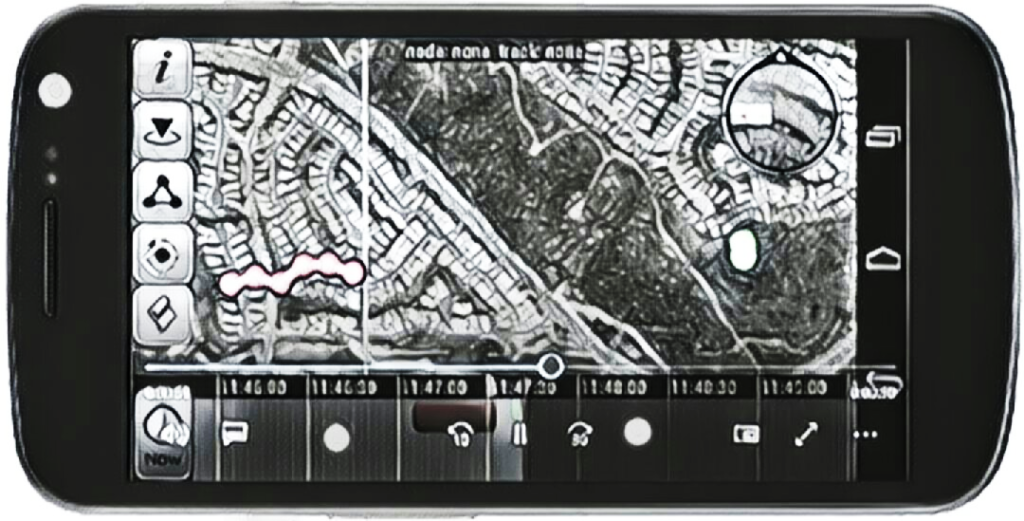
I spearheaded design and R&D on the program — research, ideation, interaction design, and prototyping, iterating fast on commercial off-the-shelf hardware — and led the other contractors, among them BAE, SAIC, and SRI. The result: a mobile tracking-and-mapping application that integrated the ISR sensor data into live situational awareness in the field, backed by the assets, demo videos, and documentation that carried the program. In the hand that meant an augmented-reality view and a map-and-timeline you could scrub to pull a single track out of a flood of sensor data. The field has a name for this now, human-machine teaming. On the ground it was the seam: machine output made legible enough to trust in seconds.
research & rapid prototyping · interaction design · R&D leadership · demos & documentation
← All work · Have a stuck thing? Tell me about it →