Two hundred and ten miles
A colony doesn’t grow steadily. It doubles, and then it doubles again.
The stuck thing
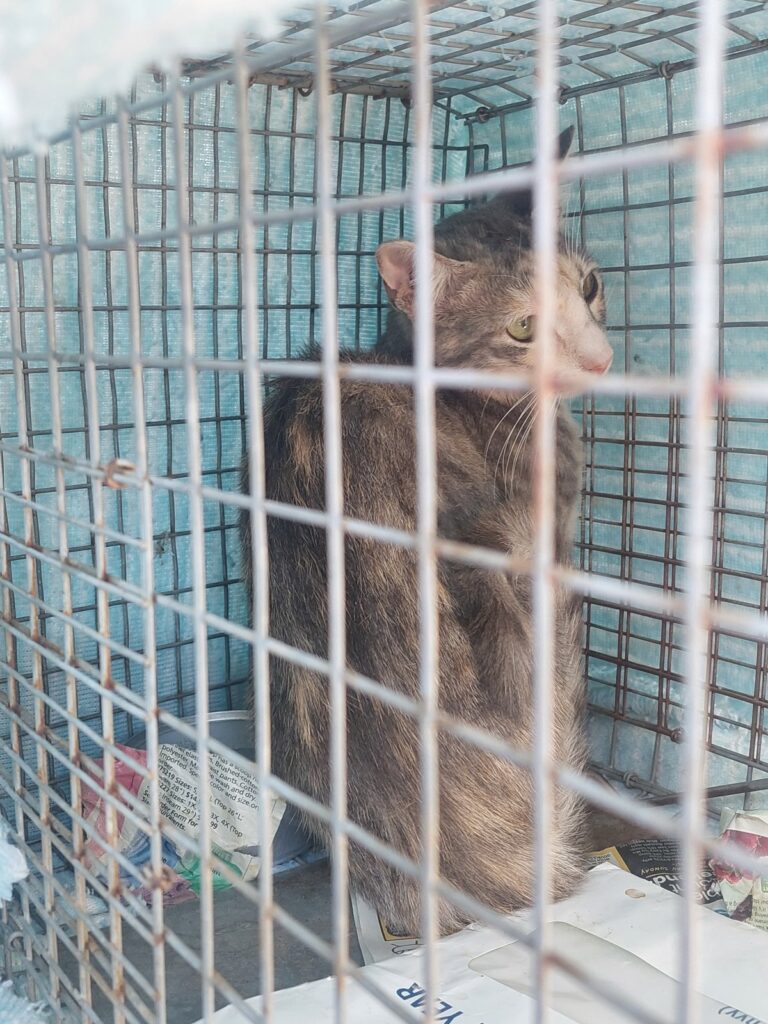
My mother feeds any cat that comes to her, and the nearest spay-neuter service I could work with is two hundred and ten miles away. Those two facts together are not a cat problem. They are a compounding one, and by every spring it was already too late to have caught up on the last.
Before any of it was driving
The driving took the most hours. The work in front of it took the most thought: finding who could actually do this, and learning how it is properly done — trapping technique, holding conditions, and the ethical rules the practice runs on. The central rule governs everything downstream. A trapped, neutered cat goes back to the colony it came from. Not somewhere more convenient. Relocation is what kills them, so every route has a return leg, and the return leg is what makes this logistics rather than errands.
Two organizations could help, and they were not interchangeable.
The Feral Cat Coalition was the default: generous protocols, capacity to match, and the standing answer was bring them in.
San Diego Humane Society is the larger and better-funded of the two, but its intake was narrow and its protocols were strict during the pandemic — it would take only cats whose condition was serious or complicated, the sort of thing visible and diagnosable at the door. That meant staying in the car, masked, while staff came and lifted the traps out of the back. Later it became a check-in table outside.
So the routing was never about throughput. One organization absorbed volume, the other took complexity, and each cat was triaged at the trap for which one it needed.
The route
Set the traps. Load. Two hundred and ten miles. Drop off.
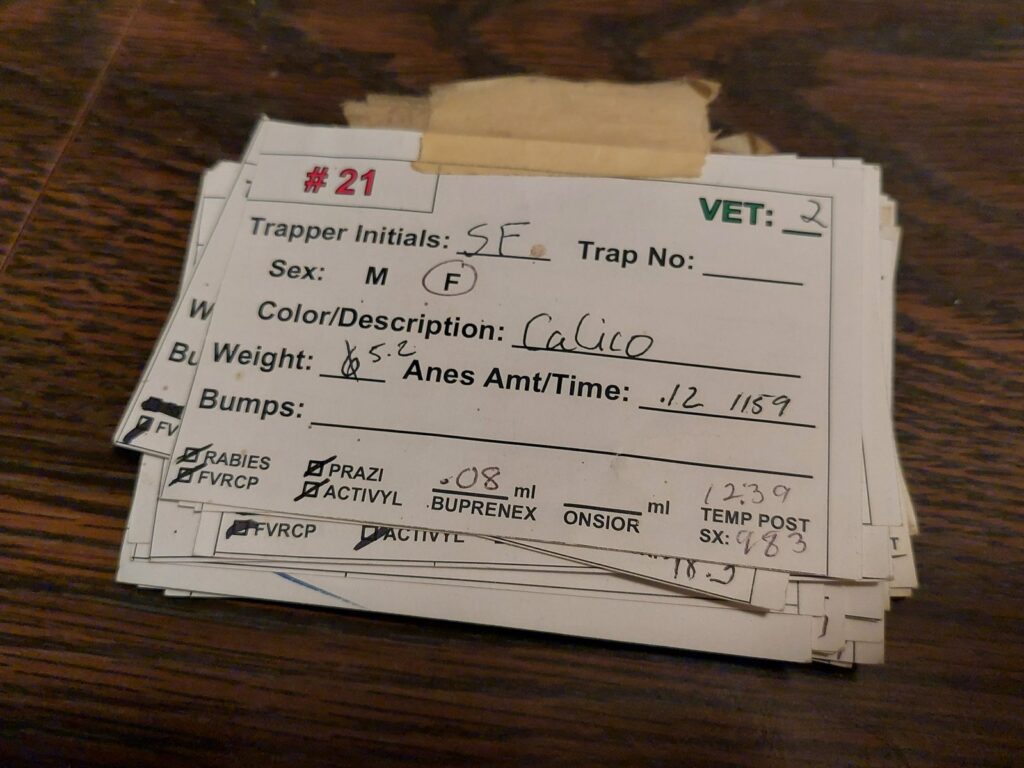
When the animals stayed at the facility overnight, the post-operative watch was theirs. More often when they didn’t, it was mine — held overnight in San Diego and observed, and driven back to whichever organization had operated if anything looked wrong.
Then two hundred and ten miles home, and every cat returned to the colony it was taken from.
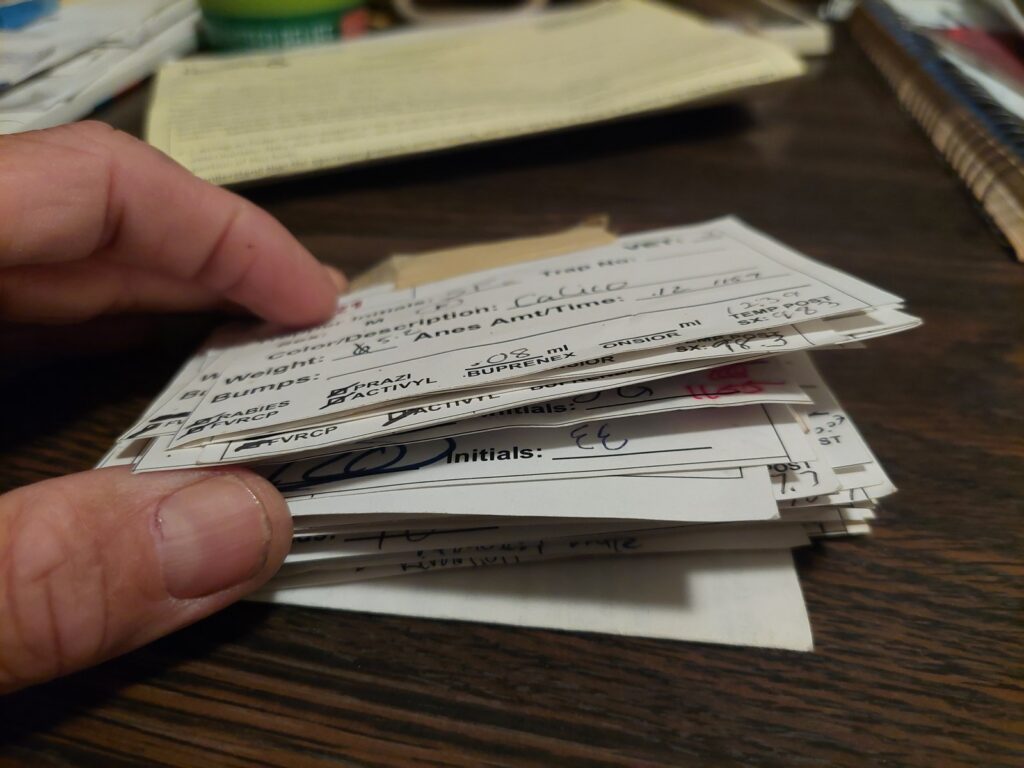
Twenty-two trips. Nine thousand miles. Seventy-four cats.
What it actually cost
Seven of the seventy-four were euthanised — about one in ten. Mostly not disease. Missing teeth and an inability to eat, wasting, and other conditions where there was no version of going back that was not cruel. That decision belongs to the vet, but you are the one who trapped the animal and you are the one who drives home without it.
One cat was pregnant when she went into the trap and had given birth by the time we reached San Diego. Four kittens across the whole run were young enough to socialise, and were placed with families in San Diego — which was its own piece of work: posting, asking around, and finding people who would actually take them.
The result
The colony stopped compounding. That is the whole outcome, and it is the only one that mattered: the number of cats needing this the following year went down instead of up.
route planning · triage · trapping and handling · post-operative observation · rehoming
← All work · Have a stuck thing? Tell me about it →