The part that isn’t the measurement
Sigma Connectivity’s business is measurement. They test how devices hear and how they sound — microphones, speakers, speech recognition — which means their real product is a set of conditions clean enough that the result belongs to the device and not to the room it was measured in.
The stuck thing
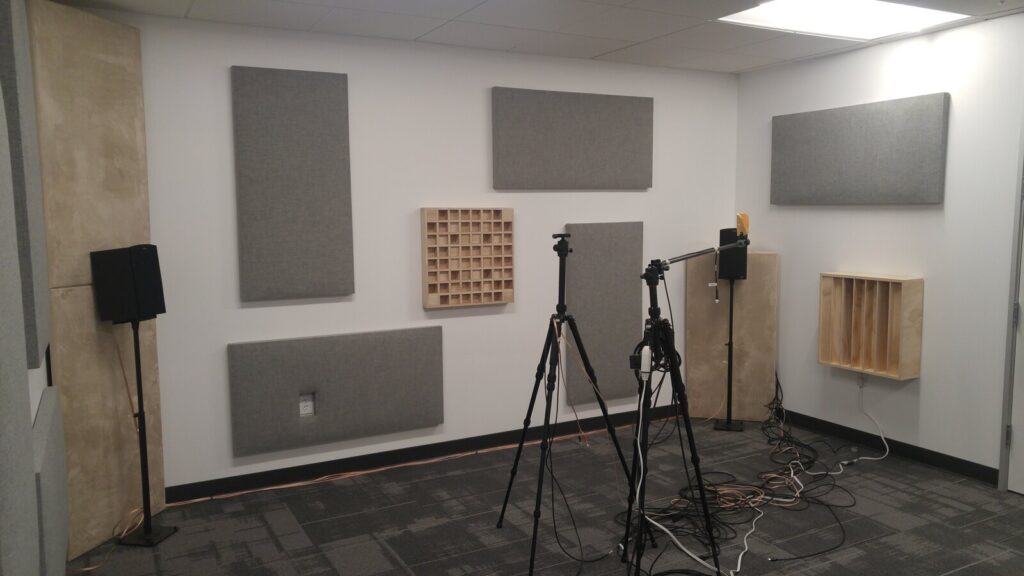
In late 2019 they moved into a new building, and within the year they had taken a second suite in it. Neither one could measure anything. The rooms had light where tests needed dark, reflections where they needed absorption, heat with nowhere to go, and no drawings for any of it.
I was engaged by the hour. I did not work by the hour.
The diagnosis
An hourly contractor with no plan bills whatever happened. What I was being asked to do was a sequence of small builds spread over months, each dependent on decisions nobody had made yet, in a building still filling up around me. So every phase started as a scope — declared up front, costed where it could be, revised in writing when the work proved something wrong — and the plan of record lived in the invoice. Planned, happening, done, updated as the billing progressed. A client reading their bill should be able to see what their money bought and what is coming next. That is how I have run every engagement I have had.
Under that, three problems that look like carpentry and are not.
A treated room is a specification, not decor. The reason a test room has panels on it is that the building is otherwise part of the measurement. Which panel goes where is a dimensioned question, and it has to be answered on paper before anything is drilled.
Isolation has a geometry. Testing a single device on a bench meant an enclosure, and the enclosure’s minimum size was fixed by physics rather than shelf space: put a speaker closer than half a meter to the device and the near field distorts what you are trying to record. Everything else — mass, sealing, decoupling, and how to move cooling air through an airtight box without letting sound out with it — follows from that.
Heat is a measurement problem too. A room full of radio transmission test equipment gets hot, and the equipment’s tolerance, not comfort, sets the target. The first question was not what to buy. It was how much load there was.
Made it go
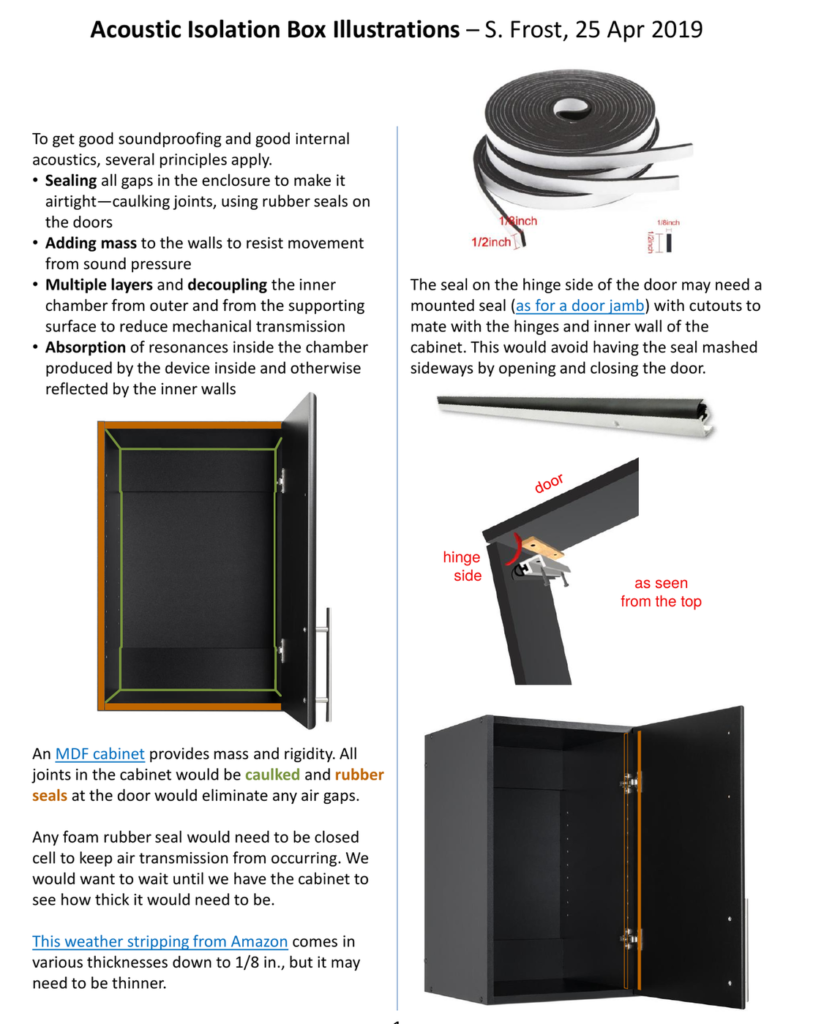
The enclosure came first, in April 2019, a study. I took the requirements off the engineers who would use it — fifteen watts of dissipation per device, two feet for the tallest one, half a meter of clearance minimum, and it had to be presentable to a customer, possibly in quantity. I worked the four things that actually reduce sound transmission — mass, decoupling, dense-light-dense layering, sealing — into a cabinet, solved the airflow with a staggered baffle path borrowed from an engine muffler, and priced it three ways. Then I wrote it up in two illustrated pages a non-specialist could approve, and handed it over.
I do not know whether it was built. Sigma had engineers who could have taken it from there, and I was not in that loop. What I do know is that eight months later one of them came back to it and asked me to walk her through the research.
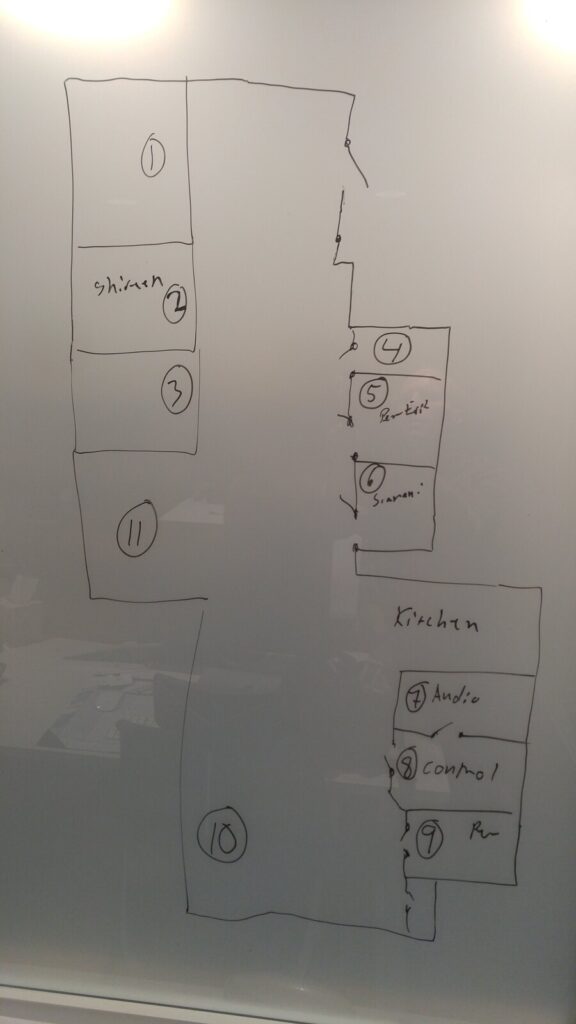
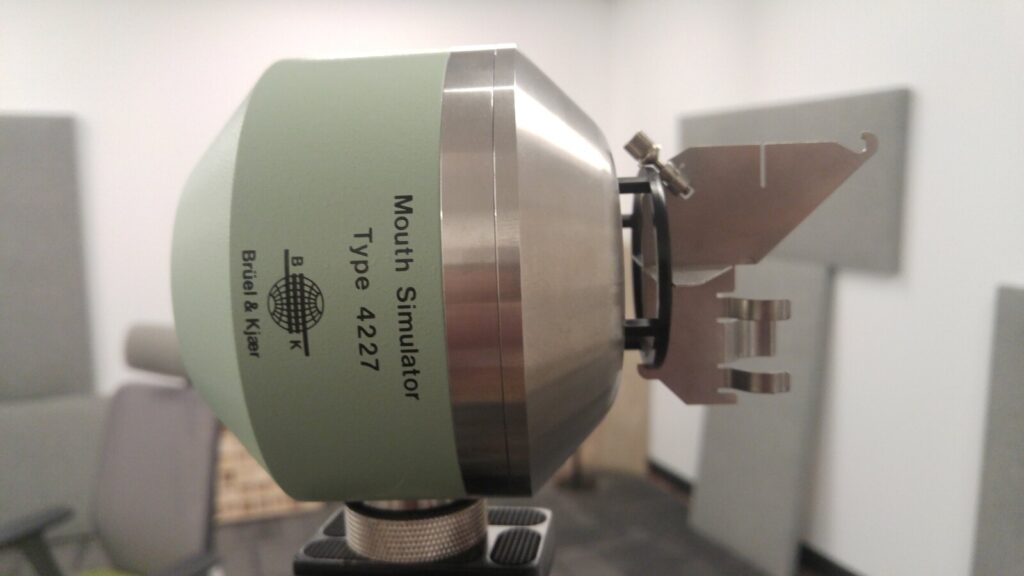
The room ran October to December 2019. I laid out the suite on a whiteboard first — every space numbered, the audio room and its control room next to each other — then drew dimensioned elevations for three walls and set out every panel on them before touching a drill.
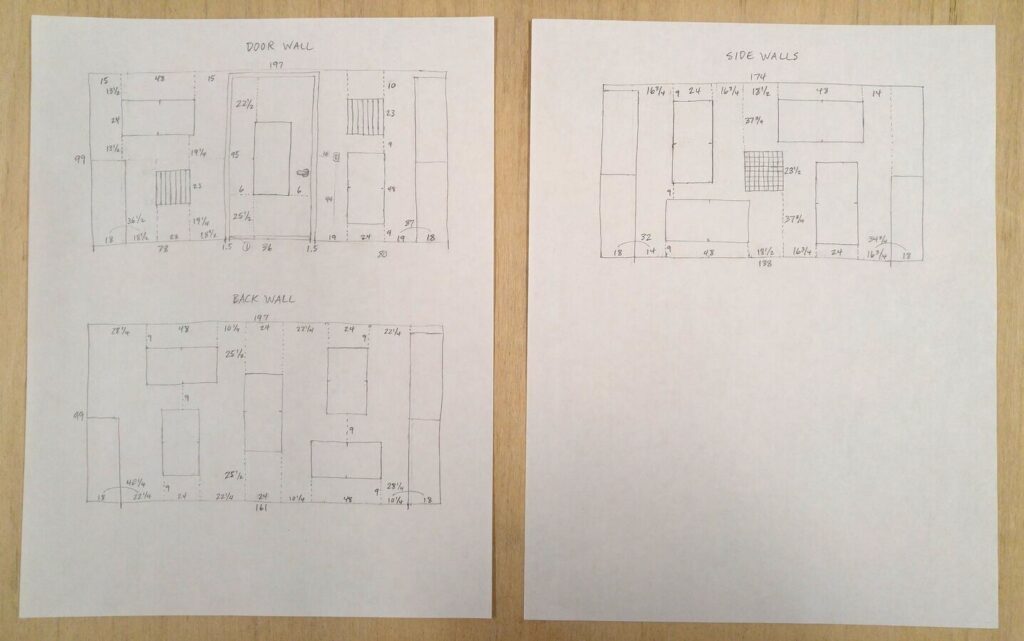
Two things came out of that. The manufacturer’s panel template was printed out of register and was not symmetrical; I found it while checking it against the layout and corrected it before it could put every panel on the wall slightly wrong. And the layout collided with the electrical outlets — an acoustic panel over an outlet is either a bulge or a hole, and both defeat the panel. So I test-fitted the whole run before committing, then built recessed pass-through boxes out of mitered one-by-two and set them into the panels. A box like that puts a hard-walled cavity in the middle of an absorber, which is the opposite of the point — so the panel’s own fabric was cut and folded back into the recess, two layers deep, until no wood showed. The outlets stayed usable and the panels stayed flat.
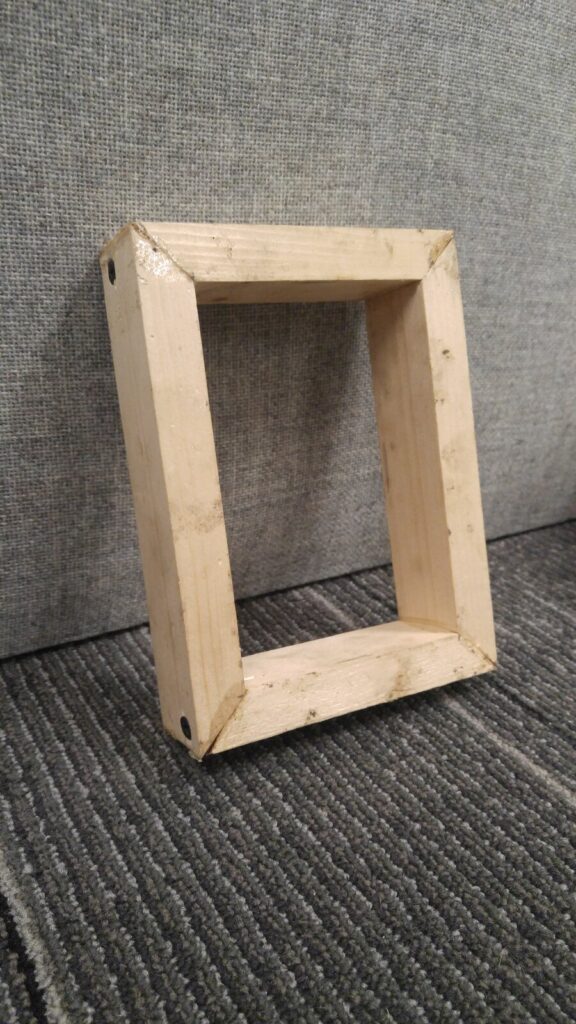
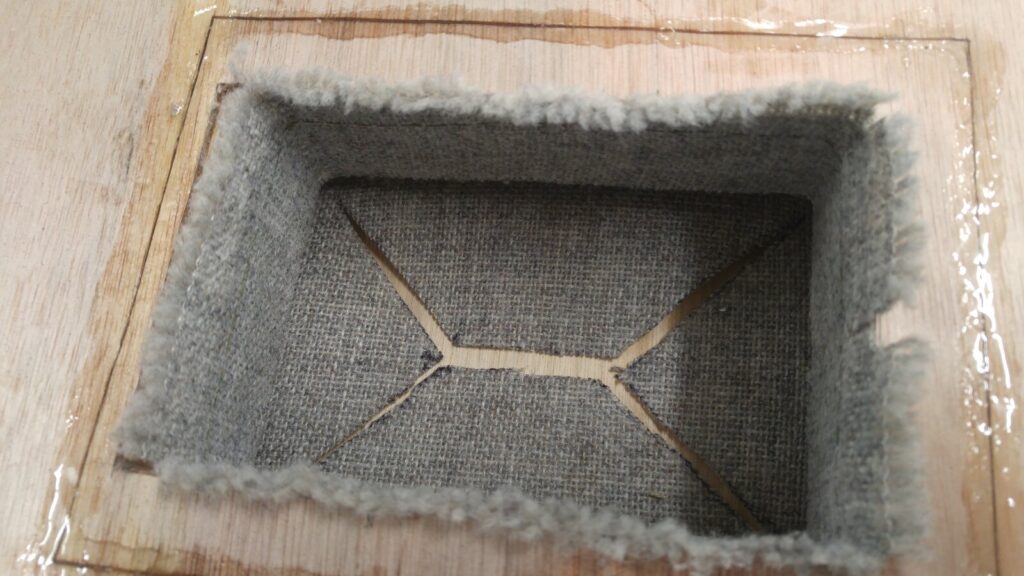
Then the small things that only show up later. The panel on the door needed adhesive as well as fasteners, because a door that swings twice a day will eventually shake something off a door.
The cooling ran October to November 2020. The request was a portable air conditioner for a room full of radio transmission test equipment. I started with the load rather than the catalogue. The unit’s ninety-degree exhaust has to go somewhere, and where it was going was the room next door, which would raise that room’s temperature in turn (to be removed by the central HVAC), so the thing had to be sized against the whole path and not the box it stood in. 14,000 BTU covered it. Then I wrote the components up as options, with images, links and prices, sent it for a decision, and built what came back approved.
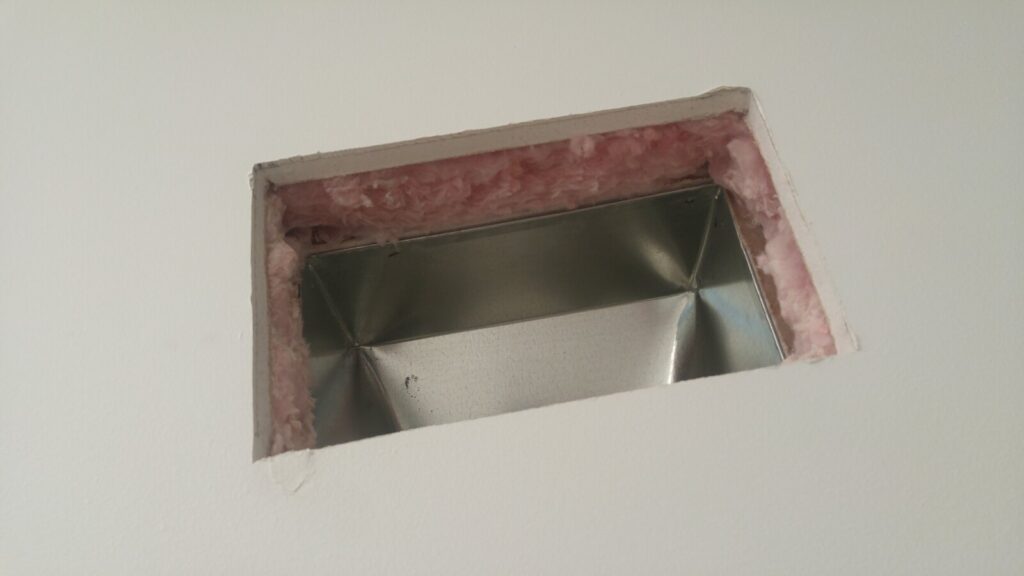
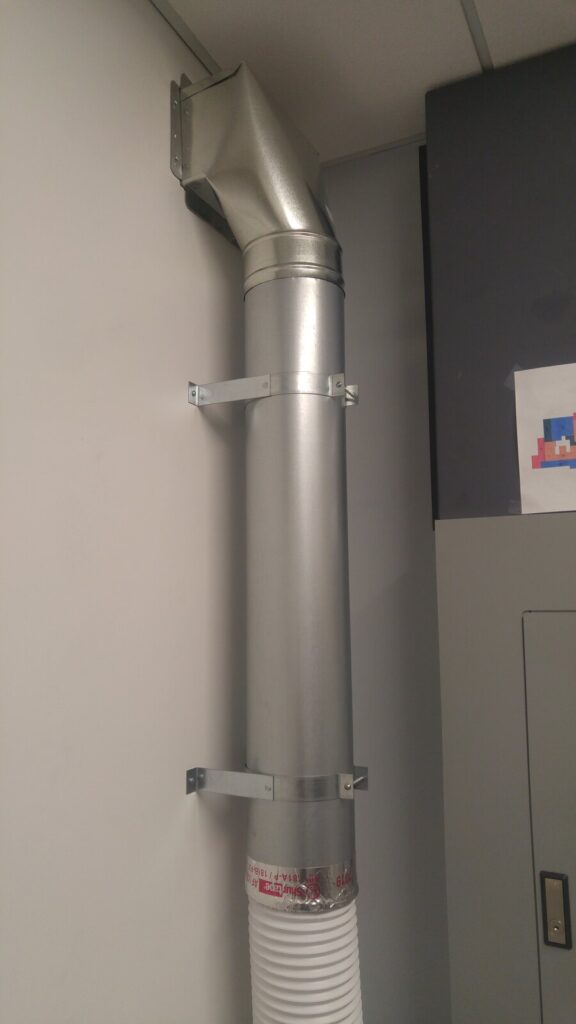
What got built is staged rather than single-purpose. A variable-speed, thermostatically controlled fan does most of the work, moving air between the two rooms on its own. A return vent gives that air a way back, because a fan pushing into a closed room is a fan fighting itself. The chiller next door takes whatever is left: its cool air runs up the wall in rigid duct and out through a high register. Two stages, in the order you would want them to run — and on most days only the quietest one does.
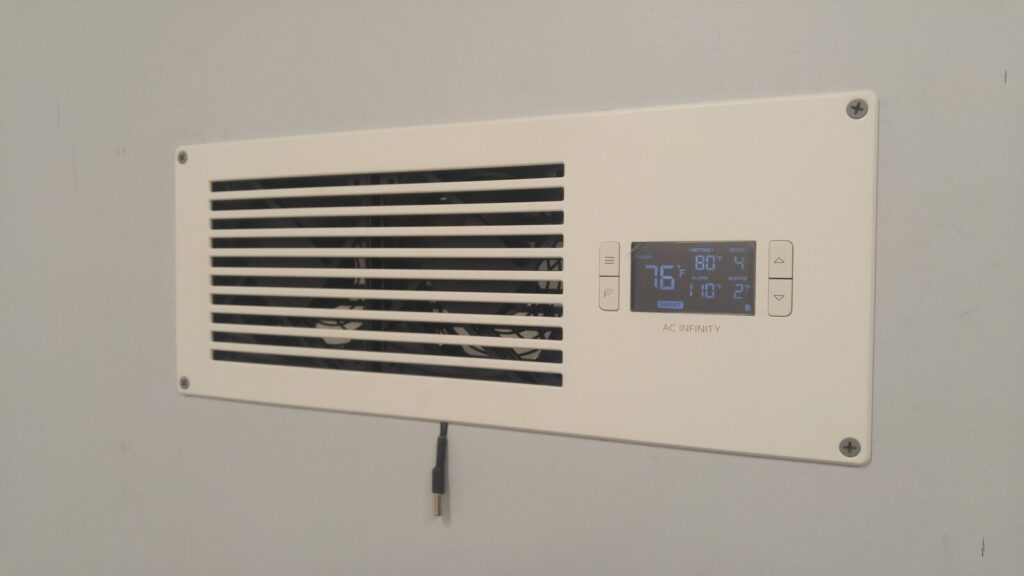
Most of that proposal is ducting. One paragraph of it is not:
We need to determine the ideal location on the wall in the lab based on the occupants and their wishes. Would they want air blowing on them, thermostat control very accessible?
Nobody asked for that. There was no line item for it and no one would have noticed its absence. But a machine that keeps equipment inside its tolerance and makes the room unpleasant to sit in has solved half a problem, and the half it left is the half with people in it.
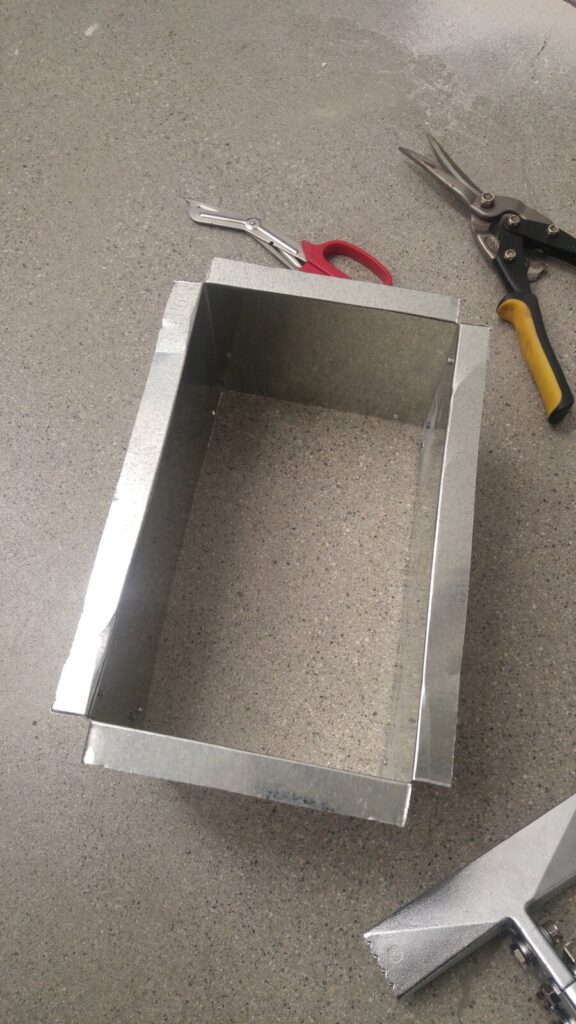
The build was custom sheet metal, because stock fittings would not mate to the equipment. I priced custom fabrication at three shops, then found stock parts that could be cut and re-formed instead. I bought the tools for that and learned to use them on the job. It is very simple ductwork and no sheet metal shop would be impressed by it — but nothing off a shelf fit what was needed, and I caught, the day before installing it, that the register boot I had bought had a different standoff distance from the wall straps. Exchanged for a matched set. It is a quarter inch. It would have held the duct off the wall at an angle for as long as the building stood.
The same job, without a building
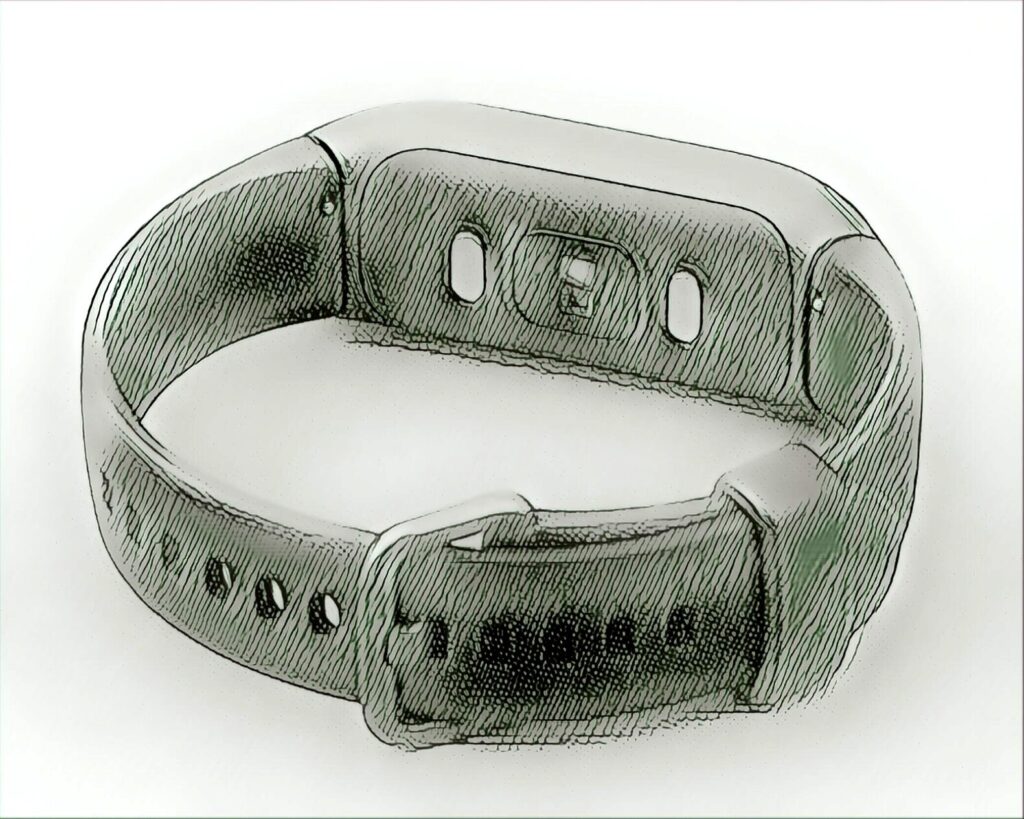
In December 2020 the same client put me between two other parties: a platform customer’s engineering team, and a field vendor running human trials for them. A wrist-worn sensor device — motion, heart rate, pressure, GPS — needed a corpus of real activity data to validate the algorithm that would classify it. My title was project manager. The actual job was the one I had been doing all year: keep the apparatus from getting into the measurement.
It was getting in everywhere. There was no data schema — the collection ran on spreadsheets structured for humans to read rather than machines to parse, so records arrived typed inconsistently, structured ad hoc, and full of small errors nobody had a way to catch. Files went missing between the vendor and the client because the delivery had a shape nobody had written down. Nothing tracked issues across the three organizations. And the prototype devices themselves failed at every layer, hardware and firmware both, throughout.
So I wrote the pieces that were missing. A daily operations runbook the collectors could follow. A delivery and archive structure, documented, so a day’s data was one verifiable thing. An issue tracker I kept myself, because the alternative was pushing people for reports they were not going to file — when I project manage, I would rather fill a gap than prod someone across it. When check scripts finally surfaced how many of the several thousand records were malformed, I negotiated the correction strategy between the parties and we went back through them, scripted where we could and by hand where we could not.
The engagement ran to the end of February 2021. It overlapped the cooling build by weeks; the two ran alongside each other, as most of my work always has.
Two weeks after it closed I wrote a retrospective and sent it to the two people at Sigma who had put me there. It said what I would do differently: scrutinize the data structures earlier, insist on validation before collection rather than after, and speak up sooner about risks I had noted privately and kept to myself because I did not sense an invitation to raise them.
That last one is the one I still think about.
Related: a plan nobody amends is a plan nobody used · when the representation is the thing that makes the system operable